
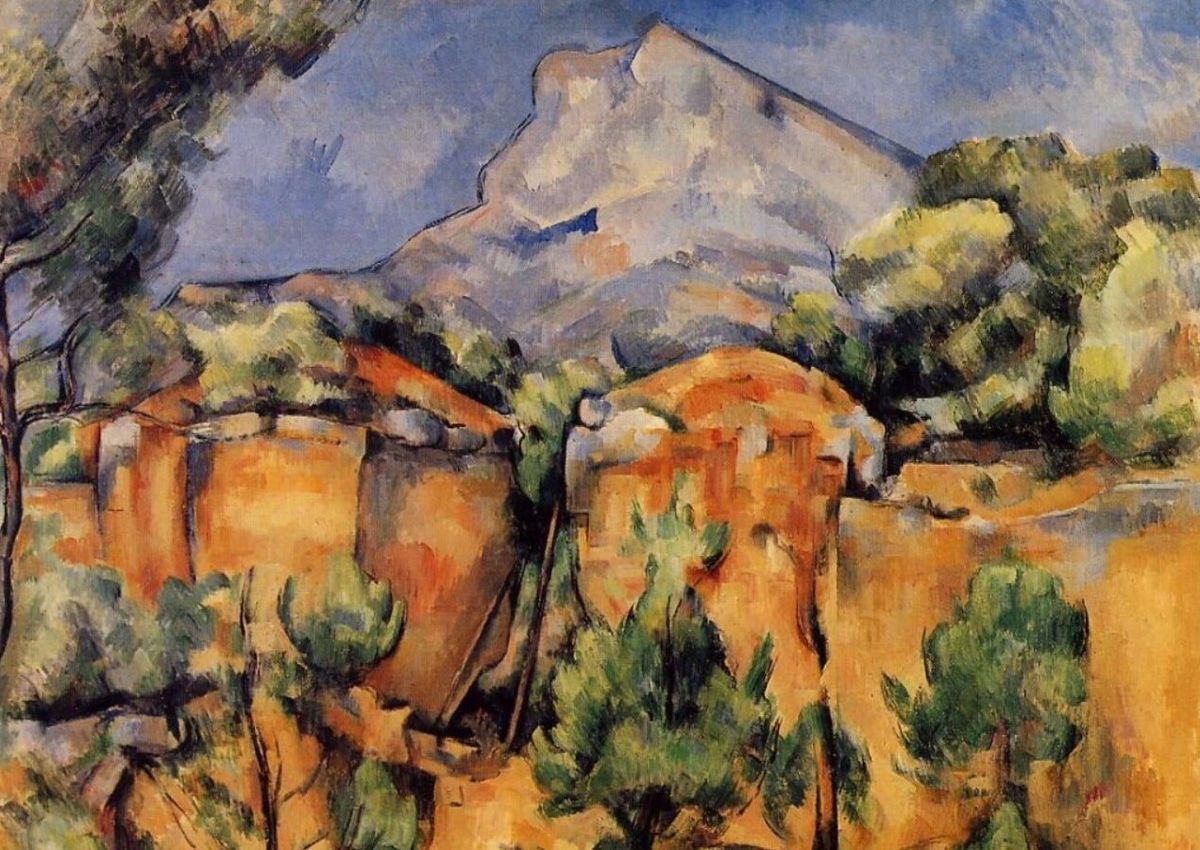
Cubism and Paul Cézanne Quiz
 by Arie FennerPublished: November 19, 2026
Share


Cubism, a groundbreaking movement in the early 20th century, transformed the way we perceive art by breaking objects into geometric shapes and presenting multiple perspectives. Paul Cézanne, often hailed as the ‘father of modern art,’ laid the groundwork for this avant-garde style with his innovative approach to form and color. Prepare to delve into the fascinating world of Cubism and Cézanne’s legacy. Let’s see how much you know!
We recommend that you do not leave the page that you are taking this quiz in. Stay honest 🙂
Cubism and Paul Cézanne Quiz Questions Overview
1. Who are considered the founders of Cubism?
Pablo Picasso and Georges Braque
Vincent van Gogh and Paul Gauguin
Henri Matisse and André Derain
Claude Monet and Édouard Manet
2. Which painting by Paul Cézanne is often cited as a precursor to Cubism?
Mont Sainte-Victoire
The Starry Night
The Persistence of Memory
The Scream
3. What is a key characteristic of Cubist art?
Use of bright, unrealistic colors
Depiction of objects from multiple angles simultaneously
Focus on naturalistic detail
Emphasis on light and shadow
4. Which of the following works is a famous example of Cubism?
Les Demoiselles d’Avignon
Starry Night
The Night Watch
The Birth of Venus
5. How did Paul Cézanne influence the development of Cubism?
By using pointillism
Through his emphasis on geometric simplification and multiple perspectives
By focusing on surrealism
Through his use of vibrant colors
6. What distinguishes Analytical Cubism from Synthetic Cubism?
Analytical Cubism uses collage elements, while Synthetic Cubism does not
Analytical Cubism focuses on breaking down objects, while Synthetic Cubism builds up images using simpler shapes and collage
Analytical Cubism uses bright colors, while Synthetic Cubism uses monochromatic tones
Analytical Cubism is more abstract, while Synthetic Cubism is more realistic
7. Which art movement did Paul Cézanne’s work help bridge?
Impressionism and Modernism
Baroque and Rococo
Renaissance and Baroque
Romanticism and Realism
8. What is the primary focus of Cubist art?
To depict realistic scenes
To explore abstract forms and multiple perspectives
To capture the effects of light
To create surreal imagery
9. Which of the following artists was NOT associated with Cubism?
Juan Gris
Fernand Léger
Salvador Dalí
Robert Delaunay
10. What innovation is Pablo Picasso credited with in the realm of Cubism?
Inventing pointillism
Pioneering the use of collage in fine art
Developing the technique of chiaroscuro
Introducing the concept of plein air painting
11. Which of these characteristics is NOT typical of Cubist art?
Fragmented forms
Multiple viewpoints
Realistic shading
Geometric shapes
12. What was Paul Cézanne’s nationality?
French
Spanish
Italian
Dutch
13. Which period of Paul Cézanne’s work is most associated with the development of Cubism?
His early Impressionist period
His mature period, focusing on still lifes and landscapes
His final years, with a focus on portraits
His academic training period
14. What was the main goal of Cubist artists?
To create realistic depictions of the world
To break away from traditional perspectives and explore new ways of seeing
To focus on religious themes
To emphasize the use of bright colors
15. Which of the following is a common subject in Paul Cézanne’s paintings?
Urban landscapes
Mythological scenes
Still lifes
Historical events
16. How did Cubism influence later art movements?
It had little to no influence
It paved the way for abstract and non-representational art
It led to a resurgence of classical realism
It primarily influenced sculpture
17. Which of these elements is often found in Synthetic Cubism?
Pointillism
Collage
Realistic portraits
Impressionistic brushstrokes
18. What was one of the main criticisms of Cubism when it first emerged?
It was too colorful
It was too abstract and difficult to understand
It was not abstract enough
It focused too much on religious themes
19. Which of the following best describes the impact of Paul Cézanne on modern art?
He had a minimal impact on modern art
He is considered a foundational figure in the transition to modern art
He was primarily known for his sculptures
He focused exclusively on portrait painting
We recommend that you do not leave the page that you are taking this quiz in. Stay honest 🙂
Can Your Friends Do Better Than You in This Quiz?
Share this quiz with your friends and compare results.


Was this page helpful?
More Popular Art Quizzes:
-
 Top Quiz
Photography Quiz
-
 Top Quiz
UNESCO Dance Quiz
-
 Top Quiz
Grant Wood Art Style Quiz
-
 Top Quiz
Architecture Quiz
-
 Top Quiz
Art Principles Quiz
-
 Top Quiz
Dadaism Quiz
More Interesting Quizzes For You:
-
 Top Quiz
Border Collie Quiz
-
 Top Quiz
Church Quiz
-
 Top Quiz
Oscars Dog Quiz
-
 Top Quiz
Measure Length Quiz
-
 Top Quiz
Unit Circle Quiz
-
 Top Quiz
Dachshund Quiz